

What is tendonitis?
Tendonitis is a disorder where the muscles and tendons in the wrist experience inflammation. It is quite harmless, but it can often be painful when using the hand or moving the wrist. Sometimes you may even feel – and hear – a creaking sensation in the joints. Although the disorder occurs relatively out of the blue, it is often an injury that appears after a period of harmful movements or through a severe overload of the wrist.

What is Tendonitis
If you experience hand, wrist, or thumb pain, you may be at risk of suffering from tendonitis. The tendons of the fingers and wrist glide through narrow tendon sheaths as they run from the forearm muscles and further on to the bone, where they are fixed.
With tendonitis, irritation will occur through inflammation of the tissue surrounding these tendons. Therefore, the tissue will swell and squeeze on the tendon sheath so that the tendon does not run nearly as smoothly as it usually does.
Typically, one will detect it through pains in the thumb and wrist. Finger-related symptoms can also occur, such as difficulty bending the fingers or experiencing sharp pain when trying to move them; if these symptoms persist, it is important to seek medical attention. In such cases, tendonitis is called de Quervain’s syndrome. This is named after the Swiss doctor Fritz de Quervain, who first published the disorder. These wrist and thumb pains occur most frequently in women between 35 and 55 years.
Source: NHS & Mayo Clinic
The difference between tendinitis and tenosynovitis
While both conditions seem pretty familiar, a key difference is distinct between them. Tendinitis occurs when a tendon is inflamed, leading to swelling and pain. When a tendon swells due to inflammation, it can cause joint pain, stiffness, and impaired movement. Tendons are the cords of tissue that connect bone to muscle. It occurs mainly through sports or repetitive motions at work that stresses the tendons.
So, what is tenosynovitis? It is linked to tendinitis, as it is a condition that occurs when the sheath surrounding the tendons is suffering from inflammation. These two ailments are split up because you can either experience inflammation in only the sheath but also both sheath and tendon simultaneously.

Symptoms of tendinitis
The main tendonitis symptoms are pain and swelling around the wrist and thumb, especially when you use them actively.
In the early stages, tendonitis symptoms may start mild and can temporarily subside with rest. However, if you continue to use your hand without giving it rest or doing exercises, you will typically aggravate it and cause further harm. In worst cases, you can feel such severe pain in the thumb and wrist that you will find it impossible to use the hand.
In some cases of tendonitis, one will experience a creaking sound. To some, it may sound like the floorboards of old horror movies, why it can be a bit terrifying. It is, however, quite normal, and harmless while uncomfortable.
However, it is essential to emphasize that these conditions in no way cause severe or life-threatening symptoms. They just really hurt.
If tendonitis is left untreated, symptoms can worsen and may lead to more severe pain or complications.
How does tendonitis occur?
Tendonitis is a common disorder that can happen to anyone. Medically, it is considered an irritating condition that causes pain and swelling in the wrist around the thumb. The irritation occurs when muscles or tendon sheaths in the wrist experience inflammation. The difference between a common inflammation and a tendon inflammation is that the inflammation related to tendonitis occurs without bacteria but by tendon overload. Certain activities, if done improperly, can end up causing pain or discomfort in the hand and wrist.
Tendonitis occurs mainly based on three causes. Firstly, it can happen through a blow or a shock that affects the tendon sheath or tendons. Secondly, it can occur in the event of an overload of the thumb or wrist, which ultimately means the tendons have been working on overtime. Placing too much stress on the hand and wrist tendons, especially during repetitive or strenuous activities, increases the risk of tendonitis. Finally, it can happen through one-sided, repetitive work, which over time strains the wrist and thereby the tendons. Starting a new sport without proper guidance or technique can also increase the risk of developing tendonitis. Additionally, certain medical conditions such as rheumatoid arthritis, diabetes, or gout can increase the risk of tendon inflammation, making individuals more susceptible to developing tendonitis.
Concerning the latter, some professional groups are at greater risk, such as painters, cleaning staff, or other groups with lots of manual work.
However, you are by no means risk-free if you sit behind the computer daily. Typically, computer users tend to work quite intensely with their mouse and keyboard, and quite often in inappropriate working positions. It can strain the body quite severely – and thereby also the arms and wrists, which could lead to mouse arm and other repetitive strain injuries – if, for example, you work at a table that does not have the proper height.
Source: Healthline & Mayo Clinic
Tendonitis treatment
If you are already experiencing pain, a swollen thumb, or similar symptoms, treatment will focus on keeping your hand as still as possible and avoiding activities that use the hand. You should pause any form of physical activity that involves moving your hand, except for activities like walking or cycling.
If your job involves manual or repetitive work and you experience thumb pain, try to find alternative ways to perform your tasks. Speak to your manager to determine the best possible solution for you.
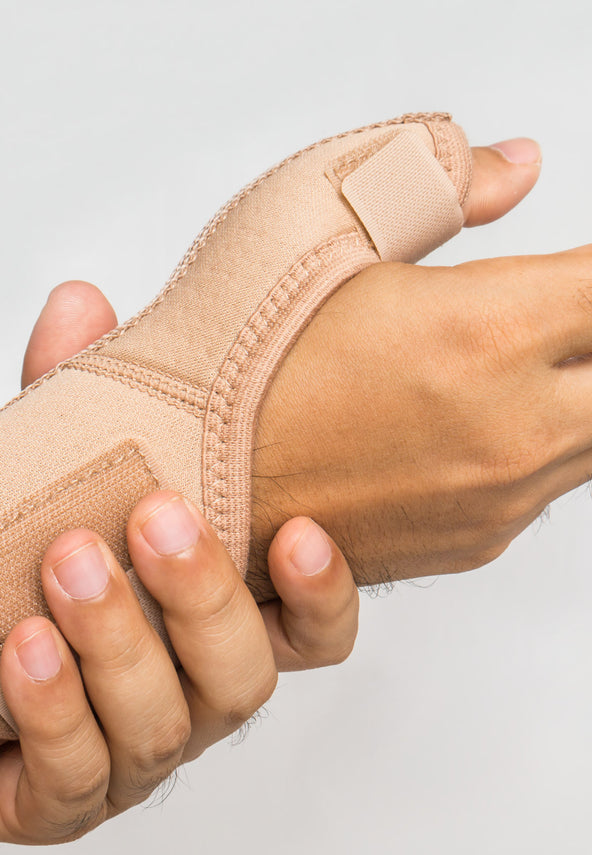
In addition to rest, you can have hand tendonitis treated by using support bandages and compressions to protect the injured area and prevent further strain. Painkillers can also help reduce inflammation.
As the pain subsides, you can begin gentle exercises and strength training with minimal load, continuing to use a support bandage as needed.
Medical treatments are available if simple relief methods are not effective. Arthritis medicine can reduce inflammation and act as a painkiller, and is often the first medical alternative. If this does not work, your doctor may recommend adrenocortical hormone or various steroid injections.
If conservative treatments are unsuccessful and you have severe tendonitis that significantly limits movement, more advanced interventions may be necessary. In such cases, you may require surgery to release tight tendons or remove inflamed tissue, allowing the tendon to move more freely.

What can you do yourself against tendonitis and tenosynovitis?
In addition to resting an overloaded thumb and wrist, there are several exercises and initiatives you can try out yourself, which both prevent and treat tendonitis and tenosynovitis.
These exercises consist of endurance training that focuses on the muscles where your pain can occur. You can find a lot of exercises online. Still, it is always a good idea to talk to a physiotherapist or occupational therapist who has a deep insight into the body and its functions.
If you are struggling with the ailments today, you can still work out and stretch your arm, wrist, and hands. However, you must not worsen the injury by overloading further. While soreness and muscle pain is normal, it will calm down within 1-2 hours. If it lasts longer than that, there is a risk that you are pushing your body too heavily. If so, you can still do pain-relieving activity through a walk or bike ride, which changes your body position while keeping you active.
It's also important to note that symptoms originating from the elbow may present differently than those from the hand or wrist, so distinguishing between these conditions can help ensure you get the right treatment.
Source: WebMD
Frequently Asked Questions
How do you treat tendonitis in the hands?
Hand tendonitis treatment focuses on rest, inflammation control, and ergonomic adjustments. The first step is to reduce strain—limit repetitive wrist and finger motions, especially mouse or keyboard use. Ice, over-the-counter anti-inflammatory medication (like ibuprofen), and supportive bandages can relieve pain and swelling. Once pain decreases, gentle stretching and strengthening exercises help the tendon regain mobility.
If symptoms persist, a doctor may recommend physiotherapy, corticosteroid injections, or—rarely—minor surgery to release the affected tendon sheath. Using ergonomic devices, such as Contour Design’s RollerMouse or Unimouse, reduces repetitive stress by promoting natural wrist alignment and balanced movement, which means recovery happens faster and reinjury risk drops.
Take action: Pause repetitive motions and adjust your workspace with an ergonomic mouse today to reduce strain within minutes.
How long does it take for a tendonitis hand to heal?
Recovery time depends on severity and how soon you rest the injured hand. Mild cases often improve within 2–4 weeks with proper rest, icing, and ergonomic corrections. Moderate to severe tendonitis may take several months to heal fully, especially if repetitive strain continues.
What are the four symptoms of tendonitis?
The four most common symptoms of hand tendonitis are:
- Pain or tenderness around the wrist, thumb, or forearm.
- Swelling or warmth near the affected tendon.
- Stiffness or reduced range of motion.
- A creaking, clicking, or snapping sensation when moving the wrist or fingers.
These symptoms often worsen after repetitive typing or mouse use. Early intervention and better ergonomics can prevent the inflammation from becoming chronic, which means fewer interruptions to your daily work and long-term wrist health.
What could be mistaken for tendonitis?
Several conditions share similar symptoms with tendonitis, including:
- Carpal tunnel syndrome — nerve compression causing numbness or tingling in the fingers.
- Arthritis — joint inflammation leading to stiffness and swelling.
- Trigger finger — a tendon catching or locking when you bend a finger.
- Tenosynovitis (e.g., De Quervain’s) — inflammation of the tendon sheath rather than the tendon itself.
A clinical exam or ultrasound can confirm the exact cause of your wrist or finger pain. Since many of these disorders stem from repetitive strain, using a well-designed ergonomic mouse and keyboard setup from Contour can significantly lower your risk.