

7 Ulnar Nerve Entrapment Stretches To Reduce Tingling And Boost Desk Comfort
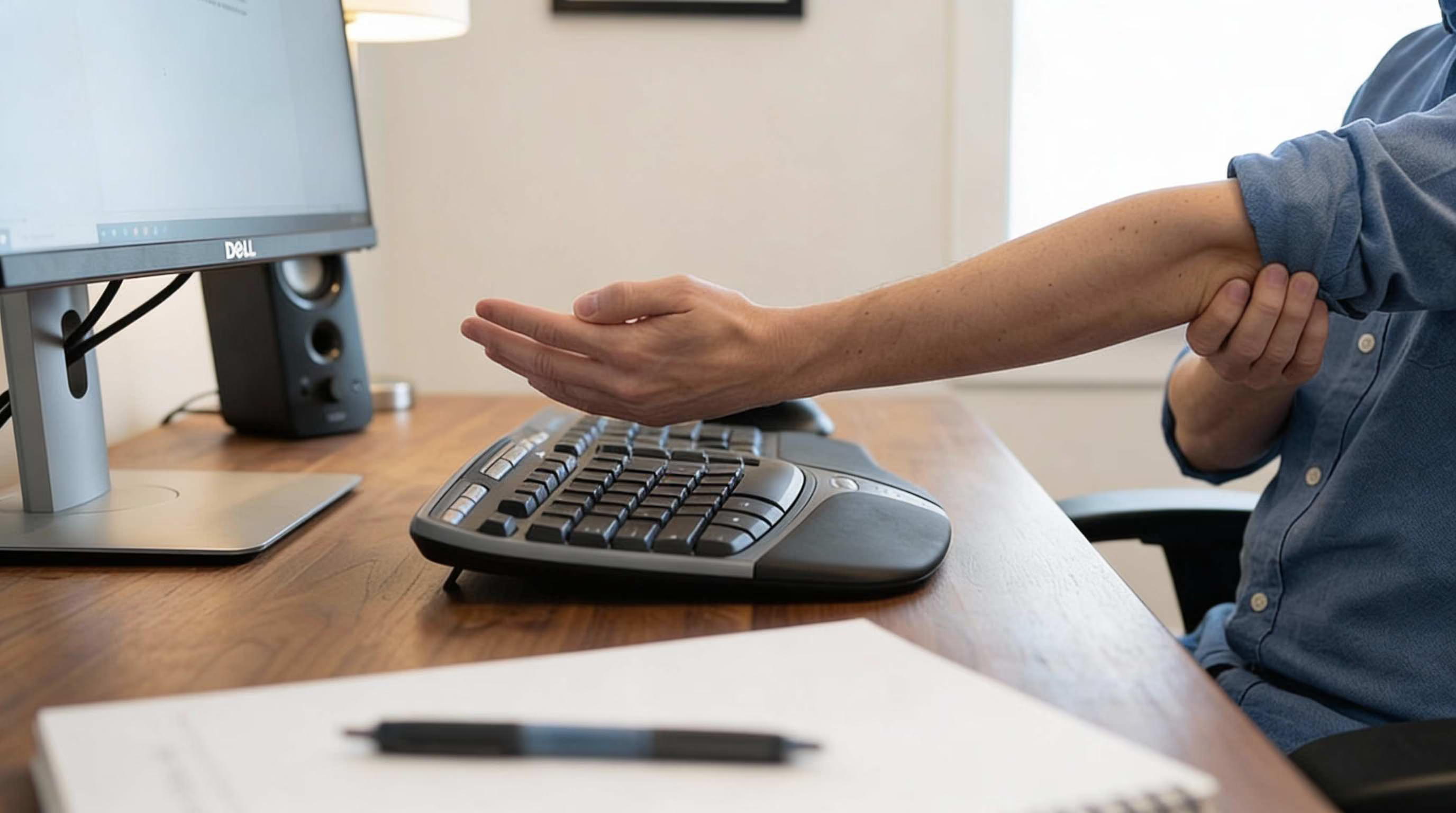
Ulnar nerve entrapment stretches can be the difference between steady productivity and a workday hijacked by tingling fingers. You're deep in focus when that familiar buzz creeps along your ring and little fingers—triggered, again, by something as simple as bending your elbow. You shake it out, adjust your arm, and keep going, but the sensation sneaks back before long. Here's a calm, practical way to ease symptoms, protect your hands, and set up your desk so you can work longer and more comfortably, with a little help from ergonomics and the right tools.
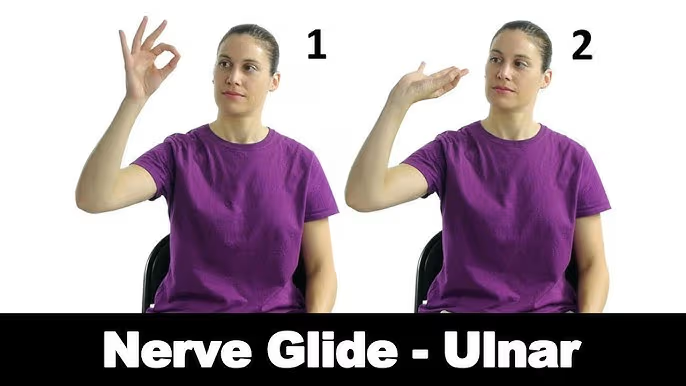
1. Ulnar Nerve Glide: “Stop Sign” To “OK” Sequence
How To Do It
Gentle motion helps the ulnar nerve glide in its tunnel, which can ease irritation. Stand tall or sit upright. Extend your arm out to the side at shoulder height, palm up. Bend your elbow so your hand comes toward your face, palm facing you, like a stop sign. Rotate your palm outward, then bend your wrist so your fingers point toward you. Turn your palm up again. Finish by slowly straightening your elbow with your fingers softly curled toward the floor. Move smoothly, no jerks. For a deeper understanding of why nerve gliding matters, see this guide to ulnar nerve release exercises.
Reps And Dosage
Begin with 1–2 sets of 10–15 slow repetitions, 1–3 times per day. Alternatively, pause at each position for 5 seconds and complete the sequence 3–5 times. Keep the motion small and comfortable at first: you can increase the range as symptoms settle.
Safety Cues: Glide, Don't Force
You should feel light tension, not sharp pain, zaps, or strong tingling. If symptoms spike, back off the range or slow the tempo. Nerves prefer calm, rhythmic movement. This article is general information: if you have persistent numbness or weakness, see a clinician.
2. Cubital Tunnel Opener: Elbow Flex–Extend With Wrist Neutral

Desk Setup And Starting Position
Lead with alignment: a neutral wrist reduces strain while your elbow moves. Sit tall, shoulders relaxed. Reach your affected arm out to the side at shoulder height with your palm facing down and wrist straight. Imagine a long line from ear to shoulder to elbow to wrist. This movement pairs well with the evidence-informed approach outlined in cubital tunnel syndrome exercises to reduce ulnar nerve irritation.
Tempo And Range Of Motion
Pull your fingers gently toward the ceiling to set the wrist, then bend your elbow and bring your hand toward your shoulder. Pause. Re-extend the elbow until your arm is straight, keeping the wrist neutral. Repeat 5–10 slow reps. Think "smooth door hinge," not "sticky latch."
Common Mistakes To Avoid
Avoid jerking, shrugging the shoulder, or letting the wrist bend backward. Keep the neck relaxed and ribs down so the elbow does the work. If tingling builds with each rep, reduce range or switch to every-other-hour sets. AAOS notes that avoiding prolonged elbow flexion, like long phone calls with a bent elbow, can help symptoms.
3. Wrist Flexor Stretch: Palm-Up Forearm Relief

Form Cues For A Nerve-Safe Stretch
Key point: stretch muscle and fascia without cranking the nerve. Extend your arm straight in front of you, palm up. With your other hand, gently pull your fingers and palm back toward you until you feel a mild forearm stretch. Keep elbow mostly straight and shoulder relaxed.
Hold Times And Breathing
Hold 15–30 seconds, 3–5 times. Breathe in through the nose, out through the mouth: let the exhale soften the forearm. If you type for hours, pair this with posture breaks to reduce load on the ulnar side of the wrist.
Modify If You Feel Tingling
Tingling means you may be loading the nerve. Ease off the pull, bend the elbow slightly, and shorten the hold. You can also switch to gentle wrist circles for 10–20 seconds. If symptoms persist or worsen, consult your clinician (NINDS, "Peripheral Neuropathy Fact Sheet," National Institute of Neurological Disorders and Stroke, 2024).
4. Pec Minor Doorway Stretch: Open The Front Of The Shoulder
Arm And Shoulder Positioning
Start with space across the chest to ease tension along the nerve's path. Stand in a doorway. Place your forearm on the doorframe with elbow just below shoulder height, palm forward. Step the same-side foot forward slightly. Gently rotate your torso away until you feel a broad chest stretch, not a pinch in the front of the shoulder.
Breathing For Deeper Release
Inhale tall: exhale and imagine widening your collarbones. Hold 20–30 seconds, 2–3 times per side. Keep your ribs down and neck long, no craning.
Progressions And Gentle Variations
For a milder option, move the elbow lower than shoulder height. For a different angle, raise the elbow just above shoulder height, but only if it's comfortable. If the front of the shoulder feels pinchy, decrease the angle or try a towel roll between elbow and frame to soften pressure. Opening the chest supports better scapular position, which can reduce downstream tension on the elbow and wrist during long typing sessions.
5. First Rib And Scalene De-Tension: Side Bend With Overhead Reach

Step-By-Step At Your Chair
Lead with calm lengthening around the neck base. Sit tall at the front of your chair. Hold the seat with your right hand. Gently side-bend your head to the left (ear toward shoulder) until you feel a light stretch along the right side of the neck. Option: float your left arm overhead and reach slightly up and left to create space through the upper ribs.
Gentle Progression And Range Checks
Hold 15–20 seconds, 2–3 times. Keep the chin tucked slightly and shoulders down. If you feel tingling into the hand, reduce the angle or release the overhead arm. You can add a small inhale into the right upper chest, exhale to settle.
Who Should Skip Or Modify
Skip strong neck stretches if you have sharp neck pain, recent injury, or dizziness: seek medical advice. For many desk workers, even a light side-bend, paired with relaxed breathing, reduces shoulder girdle tone and can indirectly ease ulnar nerve irritability during prolonged mousing.
6. Thoracic Extension Over Chair Back: Restore Upper-Back Mobility
Desk-Friendly Version (No Equipment)
Start with thoracic mobility: a more open upper back means less elbow and wrist compensation. Sit in a chair with a supportive mid-back. Interlace your fingers behind your head, bring elbows slightly in. Lean your shoulder blades over the top of the chair back as you look toward the ceiling with your eyes (not your chin). Exhale and extend gently over the chair: inhale back to neutral.
Frequency And Set Structure
Perform 5–8 smooth reps, 2–3 times per day, especially after long coding or editing blocks. Aim for motion through the mid-back, not the low back.
Posture Cues To Protect The Neck
Keep the chin softly tucked, ribs stacked over the pelvis, and elbows in your peripheral vision. If your lower back arches aggressively, slide forward in the chair or place a small towel at the mid-back as a hinge. Better extension up top often translates to lighter load on the elbows and wrists below.
7. Desk Setup Reset: Elbows-In Neutral Pose And Microbreak Flow
Chair, Keyboard, And Mouse Position
Lead with neutral alignment to prevent repeat irritation. Set chair height so your elbows rest at ~90–100° with shoulders relaxed. Keep the keyboard close and low enough that your wrists stay straight. A compact keyboard, like the Balance Keyboard from Contour, reduces lateral reach so your pointing device can sit close, less ulnar-side strain, more control.
Centered Pointing Device To Reduce Reach
Reaching out and to the side for a mouse can compress the ulnar nerve at the elbow and inside the wrist. A centered pointing device keeps your hands close, elbows in, and shoulders squared. RollerMouse and SliderMouse Pro both sit in front of your keyboard so you control the cursor with small, symmetrical movements. If you prefer a traditional form, the adjustable UniMouse supports multiple grip angles and thumb positions, helping you find a neutral forearm posture.
.avif)
60–90 Second Microbreak Circuit
Protect the nerve by changing position before symptoms build:
- 20 seconds: Thoracic extension over chair back (Section 6).
- 20 seconds: Cubital tunnel opener, 5 slow flex/extend reps.
- 10 seconds: Shake out hands: open–close fingers.
- 20 seconds: Pec doorway stretch hold, each side.
- 10 seconds: Gentle neck side-bend breath.
Cycle every 45–60 minutes. Less movement, less strain, more all-day comfort. For workplace evidence, see "Computer Ergonomics: Workstation Design" (OSHA, 2023) and Cleveland Clinic's guidance on modifying activities that provoke nerve symptoms (Cleveland Clinic, 2023).
Conclusion
Here's the through line: ulnar nerve entrapment stretches work best when they're gentle, consistent, and paired with smarter desk habits. You mobilize the nerve with glides, open the chest and upper back to reduce tension, and keep elbows close with a setup that respects your anatomy. That's where Contour devices shine, RollerMouse or SliderMouse Pro for centered control, UniMouse for adjustable angles, and the Balance Keyboard to bring everything within easy reach. You feel better, you work your way, and your hands last longer.
Take five minutes today: pick one glide, one chest opener, and one thoracic move. Adjust your keyboard and pointing device so your elbows rest in. Set a timer for microbreaks. Small changes now protect your hands, your focus, and your career tomorrow.
Key Takeaways
- Start with gentle ulnar nerve entrapment stretches like the Stop Sign to OK glide for 1–2 sets of 10–15 slow reps, stopping if sharp tingling or pain appears.
- Use the cubital tunnel opener (elbow flex–extend with a neutral wrist) for 5–10 smooth reps, and avoid prolonged elbow bending during calls or computer work.
- Stretch the wrist flexors palm-up for 15–30 seconds, 3–5 times, and modify by easing the pull or bending the elbow if tingling starts.
- Open the chest and upper back to reduce nerve tension with doorway pec holds (20–30 seconds) and thoracic extension over the chair (5–8 reps, 2–3 times daily).
- Optimize your desk setup—elbows at 90–100°, keyboard close, and a centered pointing device (e.g., RollerMouse or SliderMouse Pro) or adjustable mouse—to cut reach, and run a 60–90 second microbreak circuit every 45–60 minutes.
Frequently Asked Questions
What are the best ulnar nerve entrapment stretches to start with?
Start with three moves: an ulnar nerve glide (“stop sign” to “OK”), the cubital tunnel opener (slow elbow flex–extend with a neutral wrist), and a palm-up wrist flexor stretch. Do 1–2 sets of 10–15 smooth reps, or 15–30-second holds. Keep tension light; increase range only as symptoms settle.
How do I perform ulnar nerve entrapment stretches safely at my desk?
Keep motions slow and comfortable. You should feel light tension, not sharp pain, zaps, or escalating tingling. If symptoms spike, shorten the range, slow the tempo, or switch to gentler movements. Persistent numbness or hand weakness warrants medical evaluation. Pair ulnar nerve entrapment stretches with relaxed breathing and neutral wrist alignment.
How should I set up my workstation to prevent ulnar nerve symptoms?
Set chair height so elbows rest around 90–100 degrees with shoulders relaxed. Keep the keyboard close and low for straight wrists. Place your pointing device near midline to avoid reaching. Take 60–90-second microbreaks hourly: thoracic extensions, elbow flex-extend, doorway pec stretch, and gentle neck side-bends to reduce cumulative strain.
How long do ulnar nerve entrapment stretches take to relieve tingling?
With consistent daily practice and activity modification, many mild cases notice less tingling within 2–4 weeks; steadier improvement often builds over 6–8 weeks. Progress depends on workload, ergonomics, and sleep habits. If ulnar nerve entrapment stretches don’t help, or weakness appears, seek clinical assessment for targeted therapy or further workup.
Can sleeping position or an elbow brace help ulnar nerve entrapment?
Yes. Night symptoms often worsen with deep elbow bending. Sleep with the elbow more straight—use a towel wrap or soft splint to limit flexion, and avoid leaning on the inside of the elbow. Side sleepers can pad the elbow. Combine with daytime nerve glides and posture changes for best results.
