

Ulnar Nerve Release Exercises: Gentle Glides, Smart Setup, Lasting Relief
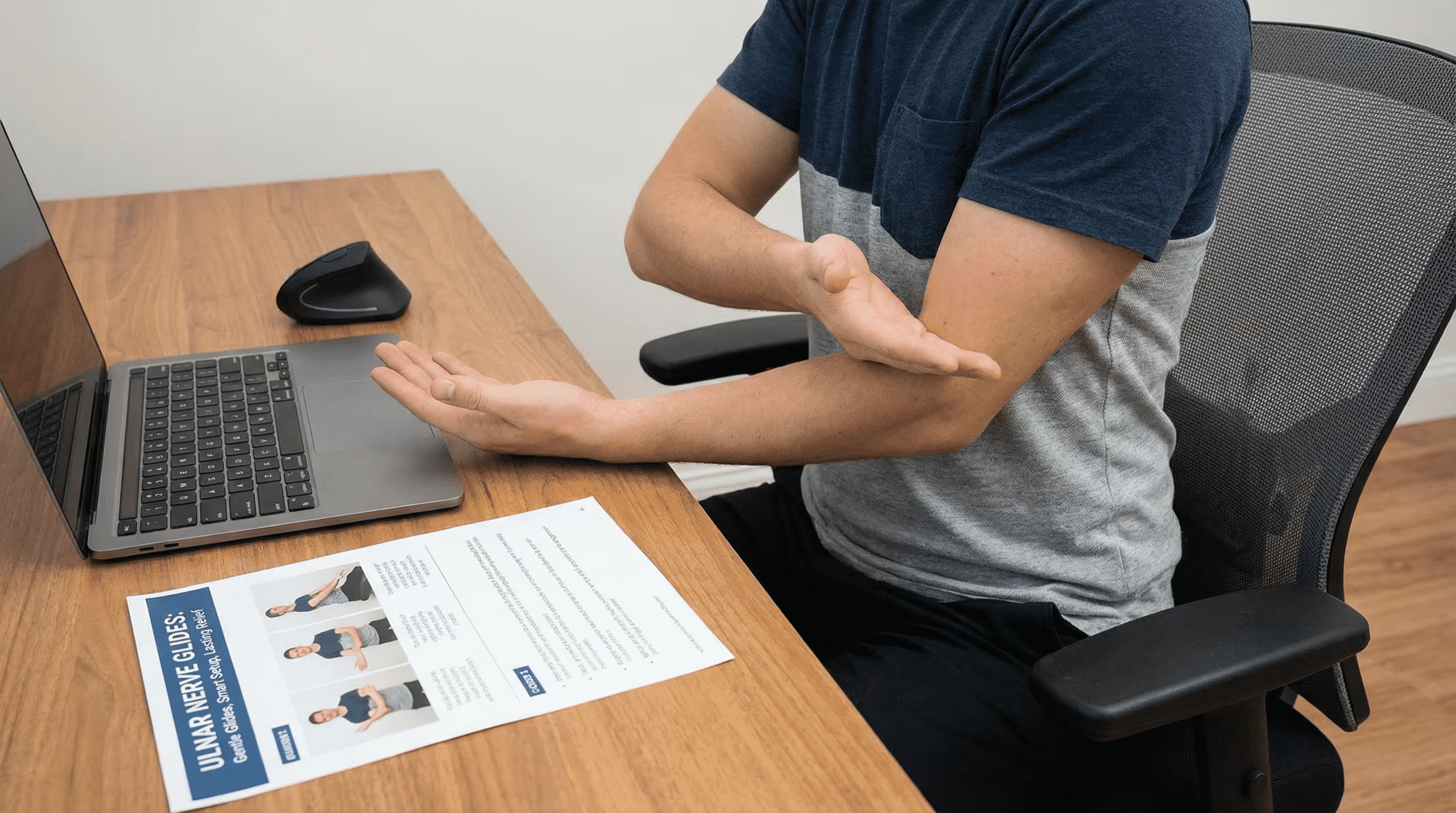
That familiar zing in your ring and pinky fingers often strikes when your elbow rests against a hard desk edge for too long. You shake your hand, flex your wrist, and keep typing, hoping the sensation fades. If this pattern sounds like your daily reality, ulnar nerve release exercises can help calm that nerve, restore control, and keep your workday smooth. With Contour Design® in your corner and a few smart tweaks, you can reduce irritation, feel better, and protect the career that runs through your hands. For the full picture on causes, symptoms, and prevention, see our guide to ulnar nerve entrapment.
What the Ulnar Nerve Does and Why It Gets Irritated

Your ulnar nerve runs from your neck to your hand, feeding sensation to the ring and pinky fingers and powering parts of your grip. When it's compressed or stretched, often from prolonged elbow bending, hard desk edges, or a cocked wrist, you feel tingling, numbness, or weakness. Here's the tricky part: nerves dislike prolonged end-range positions. Hours of elbow flexion while you phone-cradle or type with tucked elbows builds tension. And when your mouse lives off to the side, your wrist often slides into ulnar deviation (inward bend), which can aggravate the nerve's path.
Use ulnar nerve release exercises to mobilize the nerve without provoking it. Pair them with neutral alignment, short breaks, and centered controls to drop the strain at its common pinch points.
Common Sites of Entrapment: Cubital Tunnel and Guyon's Canal
The cubital tunnel, on the inner elbow behind the medial epicondyle, is the usual trouble spot, leaning on it or bending the elbow tightens the space. Guyon's canal at the wrist is another narrow corridor, irritated by pressure from handlebars, tight grips, or a bent-ulnar wrist. Desk workers see cubital tunnel symptoms more often, but poor wrist angles during mousing or typing can nudge the wrist side, too. If this sounds familiar, these cubital tunnel syndrome exercises and targeted Guyon canal syndrome exercises can help address each site safely. (See: Cubital Tunnel Syndrome, OrthoInfo, American Academy of Orthopaedic Surgeons, 2023.)
Symptoms You Might Notice at Your Desk
- Tingling or numbness in the ring and pinky fingers, especially when your elbow stays bent.
- Grip fatigue opening jars, carrying groceries, or finishing long editing sessions.
- A "sleepy" hand after leaning on the elbow or resting the forearm on a hard edge.
- Achy inner elbow or forearm that flares as the day goes on.
If you've felt any of these, you're not alone, and you're not stuck with them.
Warm-Up, Positioning, and Safety Basics
Start small. Two to three minutes of gentle arm circles, open–close fists, and slow elbow bends warm the system. Sit with elbows near 90 degrees and wrists straight, shoulders relaxed, and screen at eye level. Warm the forearm and neck before progressing to deeper stretches.
Baseline Posture and Breath for Low-Irritation Movement
Think length, not force. Sit tall, let your shoulders drop, and keep elbows slightly away from your ribs to avoid crowding the cubital tunnel. Breathe steadily, exhale during the "tighter" parts of each movement. Holding your breath ramps up tension along the nerve.
The Pain Rule: Mild Stretch Is Okay, Numbness Is Not
Mild pull? Acceptable. Tingling, zaps, or sharp pain? Stop. Ulnar nerve release exercises should feel like a gentle glide, not electricity. Ease off range or reps if symptoms appear, and resume when the nerve is quiet. If symptoms linger or worsen, get evaluated. (See: "Ulnar Neuropathy," Cleveland Clinic, 2024.)
Ulnar Nerve Glides (Flossing) You Can Do at Your Desk
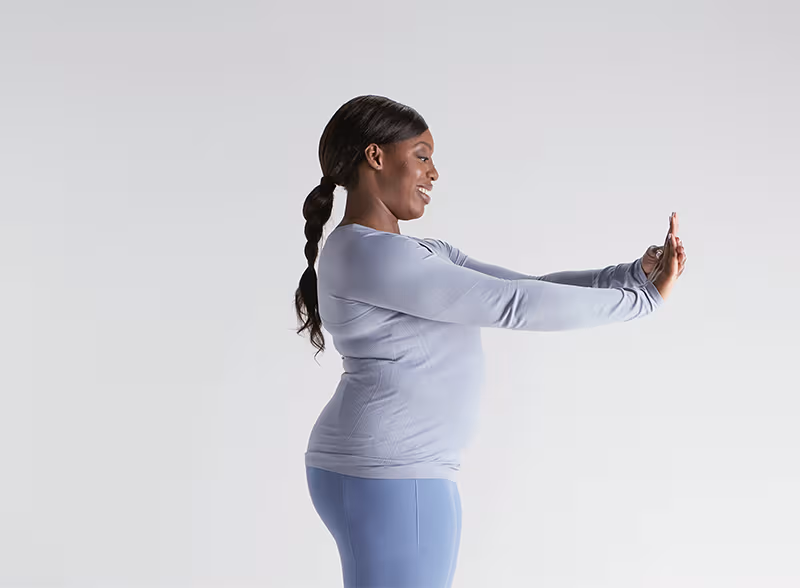
Lead with smooth movement, not maximal stretch. Perform 3–5 reps per glide, pausing 5 seconds in each position. Keep your neck long, shoulder down, wrist neutral between reps. These ulnar nerve release exercises aim to restore sliding mechanics, reduce stiffness, and settle irritability.
"OK" Sign Glide
Make an "OK" circle with thumb and index finger. Arm out to the side, elbow bends as your wrist extends: gently tilt your head away to increase tension, then return to center to ease it. Think "tension on, tension off." 3–5 slow cycles.
Waiter Tray Glide
Elbow at 90 degrees by your side, palm up like you're balancing a tray. Rotate forearm to palm-down (pronation), then back to palm-up (supination). Keep the shoulder relaxed. Small, smooth motions target the cubital tunnel without aggressive stretch.
Phone-to-Ear, Palm-Out Glide
Bring your hand toward your ear with your palm facing outward, as if showing your palm to the room. Tilt your head gently away. Hold 15–30 seconds, then release. Repeat up to 3 times per side, staying under the numbness threshold.
Sidebend-Assisted Glide
Arm straight out to the side at shoulder height, fingers long. Slowly sidebend your head away from the outstretched arm until you feel a light pull along the forearm/pinky side. Hold 5–10 seconds, return to neutral, and repeat. Less effort, more glide.
For a full sequence, rotate among these drills across the day rather than stacking all volume at once.
Mobility and Strength That Support the Nerve

Nerves travel through tissues that need space and control. Gentle mobility keeps the "nerve bed" roomy: light strength helps you maintain posture without gripping for dear life.
Wrist Flexor/Extensor Stretch, Gentle Range
Rest your forearm on the desk with your hand just off the edge. Palm down: lift the hand until a mild stretch, then return: 10 reps. Flip palm up and repeat. Twice daily. Stay in the easy range, this is for glide, not a deep pull.
Neck and Pec Opener for Nerve Bed Space
Sit tall, reach the affected arm's fingers toward the floor, and tilt your head away until you feel a light stretch in the side of your neck and upper chest. Hold 15–30 seconds, 2–3 times. This reduces tension near the nerve roots (C8–T1) that feed the ulnar nerve.
Scapular Setting and Low-Row
Set shoulder blades "down and back" without shrugging. Add a light resistance-band row with elbows at ~30–45° from your sides. 2 sets of 8–12 reps, every other day. Better scapular control lowers forearm overwork.
Grip Without Pinch and Mid-Range Triceps
Use a soft ball or putty. Squeeze gently 3 seconds, release 3 seconds, for 10–15 reps. Avoid pinch grips which load the ulnar side. For triceps, try light band extensions with elbows slightly away from your torso to avoid compressing the cubital tunnel.
Ergonomic Adjustments That Reduce Ulnar Nerve Stress
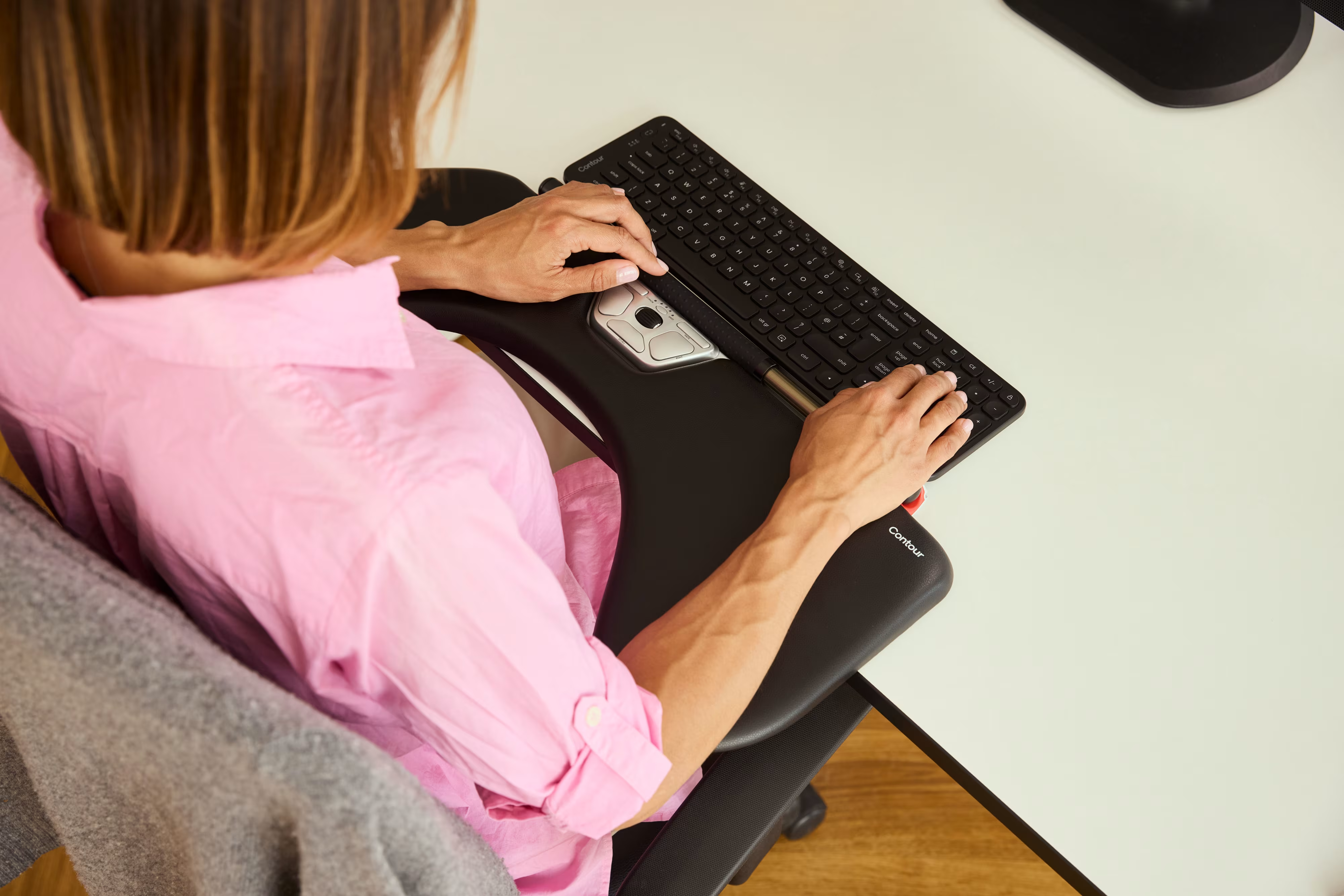
Small environment changes, big relief. Ergonomics makes your ulnar nerve release exercises stick by removing the daily friction that keeps you irritated.
Neutral Elbows: Armrests, Chair Height, Desk Clearance
Set armrests so your elbows sit around 90 degrees, shoulders relaxed, forearms level with the desk. Keep a few centimeters of desk clearance so you're not wedging elbows into your sides or leaning on a hard edge. If the desk cuts into your forearms, add a soft edge or reposition.
Keyboard and Mouse Placement: Close Reach, Neutral Wrist
Bring input devices close to your midline. Keep wrists straight, not bent inward toward the pinky side (ulnar deviation). A compact keyboard helps you keep your mouse or central device near your body. The Balance Keyboard is designed for neutral wrist angles and a slim front edge that reduces pressure.
Centered Pointing Devices to Avoid Inward Wrist Bend
Keep pointing in front of you, not off to the side. A centered device, like the Contour RollerMouse or SliderMouse Pro, cuts reach and limits ulnar deviation. Less movement, less strain, more all-day comfort. Choose from different palm supports and bar sensitivities to match your hands and workflow. On days you prefer a traditional mouse, the adjustable UniMouse helps reduce ulnar deviation through customizable tilt and thumb support.
Microbreaks and Pacing: A 30–60 Minute Cycle
Every 30–60 minutes, take 2–3 minutes to stand, roll your shoulders, and run a short glide set. This pacing prevents the "load and spike" pattern that makes nerves grumpy. Set a gentle reminder, then keep it flexible during deep-focus work.
How to Progress and Track Improvements
Progress slowly and track results. Add time or reps only when symptoms are quiet. A simple log, pain 0–10, location, triggers, and what helped, keeps you honest and shows trends. Most people feel changes within 2–4 weeks of consistent practice: full resolution can take 8–12 weeks. If your symptoms worsen, scale back to the easiest glide and recheck your setup.
A Simple Two-Week Plan: Sets, Reps, and Frequency
Week 1
- Ulnar nerve release exercises: 3 times daily, 5 controlled reps per drill.
- Wrist flexor/extensor mobility: 10 reps, twice daily.
- Grip (gentle): 10–15 reps, once daily.
- Neck/pec opener: 15–30 seconds, 2–3 times daily.
Week 2
- Glides: 2 sets of 5–10 reps, still symptom-free.
- Mobility: 3 sets for wrist stretches.
- Add scapular setting: 10 reps, twice daily: low-row every other day.
- Keep microbreaks and a neutral desk posture.
Green Flags, Red Flags, and When to See a Specialist
Green flags: tingling fades, fewer "asleep" episodes, stronger grip, longer comfortable work blocks. Red flags: increasing numbness, weakness of small hand muscles, spreading symptoms, or night pain that wakes you. If symptoms persist beyond 6–8 weeks even though exercises and ergonomic changes, see a clinician. Consider an evaluation sooner if you notice muscle wasting in the hand. This article is general information, not medical advice. For deeper background, see "Guyon Canal Syndrome," StatPearls, 2024, and "Nonoperative Management of Cubital Tunnel Syndrome," Journal of Hand Surgery, 2020.
Conclusion
When your work depends on precision, comfort isn't a luxury: it's stability for your hands and career. Ulnar nerve release exercises give you a gentle, daily reset, glide more, irritate less, and ergonomics makes each rep count. Center your pointing, keep wrists neutral, and pace your day.
Where Contour fits in: put control where your hands already are. The Contour RollerMouse keeps pointing centered so there's no reaching, twisting, or gripping. SliderMouse Pro offers smooth, touchpad-like control with clean, minimalist lines. The UniMouse adjusts tilt and thumb support to reduce ulnar deviation on days you prefer a traditional mouse. Pair any of these with the Balance Keyboard to keep elbows open and wrists aligned. Beautiful. Functional. Built to last.
If you're ready to fine-tune your setup, explore the RollerMouse family here: RollerMouse on Contour Design. Learn how a compact keyboard supports neutral reach: Balance Keyboard.
Say goodbye to feeling strained and sore. Choose alignment, choose consistency, and let your tools do more of the work. Contour Design. Work miracles.
Key Takeaways
- Ulnar nerve release exercises reduce tingling and weakness by gently mobilizing the nerve while you maintain neutral elbows and wrists.
- Follow the pain rule: light stretch is fine, but stop any glide that causes tingling, zaps, or numbness and resume only when symptoms settle.
- Do desk-friendly glides (OK sign, waiter tray, phone-to-ear) for 3–5 slow reps per drill, 2–3 times daily, and add 2–3 minute microbreaks every 30–60 minutes.
- Improve ergonomics to make progress stick: keep elbows near 90°, wrists straight, input devices close and centered, and avoid leaning on hard desk edges.
- Progress gradually, log symptoms, and expect improvement in 2–4 weeks, with fuller resolution often in 8–12 weeks if you stay consistent with ulnar nerve release exercises.
- See a clinician if numbness worsens, weakness appears, symptoms spread or disturb sleep, or if issues persist beyond 6–8 weeks despite changes.
Frequently Asked Questions
What are ulnar nerve release exercises, and how do they help?
Ulnar nerve release exercises are gentle nerve glides that improve the nerve’s ability to move through tight spaces at the elbow (cubital tunnel) and wrist (Guyon’s canal). Done without provoking symptoms, they reduce irritation, ease tingling in the ring and pinky fingers, and help restore grip control for daily tasks.
How do I perform ulnar nerve glides safely at my desk?
Warm up with light arm circles and slow elbow bends. Use low-tension drills like the “OK” sign glide, waiter-tray rotation, or palm-out phone-to-ear. Move smoothly, keep shoulders relaxed, wrists neutral, and follow the pain rule: mild stretch is okay—tingling, zaps, or numbness means stop and reduce range.
How often should I do ulnar nerve release exercises, and when will I notice results?
Start with brief sets 2–3 times daily, 3–5 reps per glide, then progress to 2 sets of 5–10 reps if symptom-free. Pair with microbreaks every 30–60 minutes. Many feel improvements in 2–4 weeks; fuller resolution may take 8–12 weeks. If symptoms worsen, scale back and reassess setup.
Which ergonomic changes reduce ulnar nerve irritation at work?
Keep elbows near 90 degrees with relaxed shoulders, avoid leaning on hard desk edges, and maintain straight wrists—especially during mousing. Bring keyboard and pointing devices close to your midline to limit reach and ulnar deviation. Use soft forearm support and take 2–3-minute movement breaks each hour.
Can ulnar nerve release exercises cure cubital tunnel syndrome, or do I need a clinician?
Exercises and ergonomic fixes often calm mild cubital tunnel symptoms. Seek care if numbness increases, you notice hand weakness or muscle wasting, symptoms spread or wake you at night, or no improvement occurs after 6–8 weeks. A clinician can confirm diagnosis, consider splinting, therapy, or further options.
What activities or sleeping positions should I avoid with ulnar nerve irritation?
Limit prolonged elbow bending (phone-cradling, sleeping with elbows tightly flexed) and avoid leaning on the inner elbow or hard forearm edges. Keep wrists from bending toward the pinky side. At night, try a towel wrap or light splint to keep the elbow slightly extended, and reduce handlebar pressure if cycling.
