

Övningar vid kubitaltunnelsyndrom för att minska irritation i ulnarisnerven och hålla dig bekväm vid skrivbordet

Övningar vid kubitaltunnelsyndrom kan vara skillnaden mellan en fokuserad eftermiddag och den där surrande “nålar-och-stickningar”-känslan längs ring- och lillfingret. Föreställ dig 15.17, en sprint review, armbågen hakad på stolens armstöd, en dov värk som bygger upp medan du scrollar. Du skakar loss — den kommer tillbaka. Med några få, precisa rörelser och en smartare skrivbordssetup kan du lugna nerven, skydda armbågen och arbeta längre med mer komfort. Ergonomiska hjälpmedel spelar en tyst men viktig roll här: mindre räckvidd, mindre tryck, bättre alignment.
1. Ulnarnervglidning (slider): mjuk rörelse, minimal tension

Så gör du
Börja med den enklaste av alla övningar vid kubitaltunnelsyndrom: ulnarnervglidning. Sträck den påverkade armen rakt ut i axelhöjd, handflatan upp. Böj långsamt armbågen och för handen mot axeln, och sträck sedan ut igen. Håll handleden neutral och rörelsen smärtfri. Tänk att du “flossar” ulnarnerven genom kubitaltunneln — inte att du töjer en stram hamstring. Rör dig mjukt och långsamt: stanna innan symtom.
Repetitioner och frekvens
Gör 3–5 repetitioner per set, 1–3 set, upp till 2–3 gånger dagligen. Den låga dosen påminner nerven om att den har utrymme att glida utan att provoceras. Många föredrar ett set mitt på förmiddagen och ett mitt på eftermiddagen för att bryta upp långa tangentbordspass.
Formtips: neutral handled, smärtfritt rörelseomfång
Din ledstjärna: neutral handled, lätt böj/sträck i armbågen och noll triggat pirr. Om symtomen ökar eller dröjer kvar gick du för långt. Glid, töj inte. Med konsekvent, mjuk praktik är detta en av de mest effektiva övningarna vid kubitaltunnelsyndrom för att lugna irritation.
Externa referenser: Cubital Tunnel Syndrome, OrthoInfo (American Academy of Orthopaedic Surgeons), uppdaterad 2023; Ulnar Nerve Entrapment, Cleveland Clinic, 2024.
2. Ulnarnervtensioner (progression): öka rörelseomfånget försiktigt
Vem bör använda detta (och vem bör avstå)
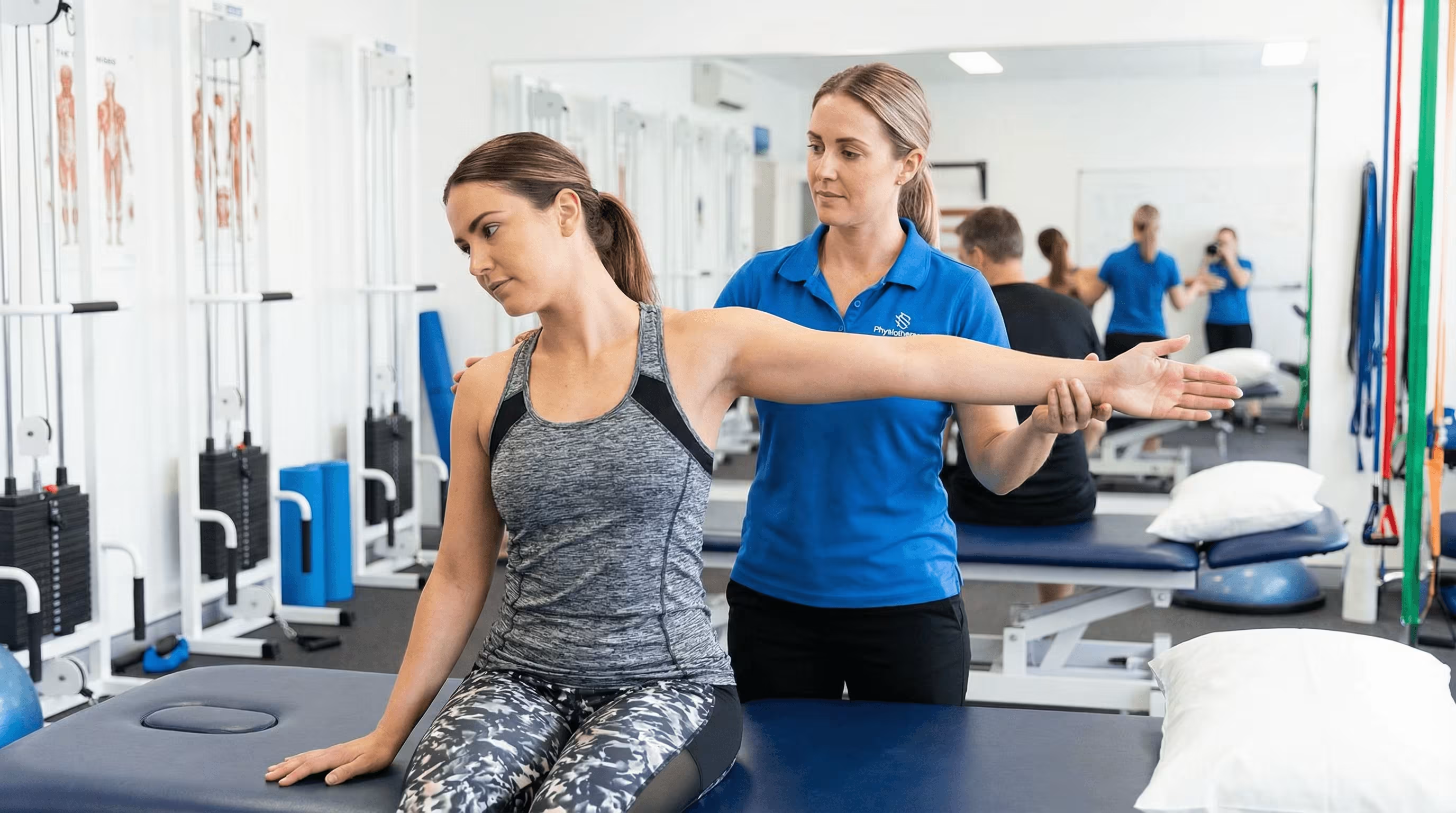
Använd tensioners först när sliders är helt symtomfria. Om pirret är frekvent, greppet känns svagt eller du vaknar på natten — avstå tensioners just nu och håll dig till mjuka glidningar. Det gäller för alla övningar vid kubitaltunnelsyndrom tills irritabiliteten har lugnat sig.
Steg-för-steg
Från slider-positionen lägger du till bara lite tension: sträck handleden lätt eller luta huvudet bort medan du böjer armbågen. Återgå sedan till neutralt läge när du sträcker ut igen. Det är en rytm: tension på, tension av — alltid inom ett bekvämt rörelseomfång. Progrediera långsamt över dagar, inte minuter.
Dosering och varningssignaler
Testa 3–5 repetitioner en gång per dag. Avsluta direkt om du känner skarp smärta, domning eller pirr som inte släpper inom några sekunder. Ihållande symtom, styrkeförlust eller fumlighet är varningssignaler — boka en bedömning hos vårdpersonal. De här ramarna hjälper dig att progrediera säkert medan du jobbar med dina övningar vid kubitaltunnelsyndrom.
Extern referens: “Cubital Tunnel Syndrome: Diagnosis and Management”, British Journal of General Practice, 2020.
3. Stretch av underarmens flexorer: minska trycket på ulnartunneln

Skrivbordssetup och handposition
Den här stretchen minskar stramhet i underarmen som kan öka trycket vid armbågen. Placera handflatan på bordet med fingrarna pekande bort från dig och sträck försiktigt armbågen tills du känner en mild stretch i underarmen.
Hålltid och andning
Håll i 20–30 sekunder och andas lugnt och djupt. Sikta på 2–3 håll per sida mellan möten eller efter längre skrivpass. Bland övningar vid kubitaltunnelsyndrom är detta ett enkelt sätt att återställa balansen när flexorerna jobbar på högvarv.
Alignment-tips: undvik att “kollapsa” i handleden
Håll handleden i extension men med stöd — utan att falla ner i handens häl. Backa om pirr uppstår. Du vill ha längd och lätthet, inte en nervreaktion.
4. Triceps- och bakre kapselstretch: stöd för lättare armbågsextension
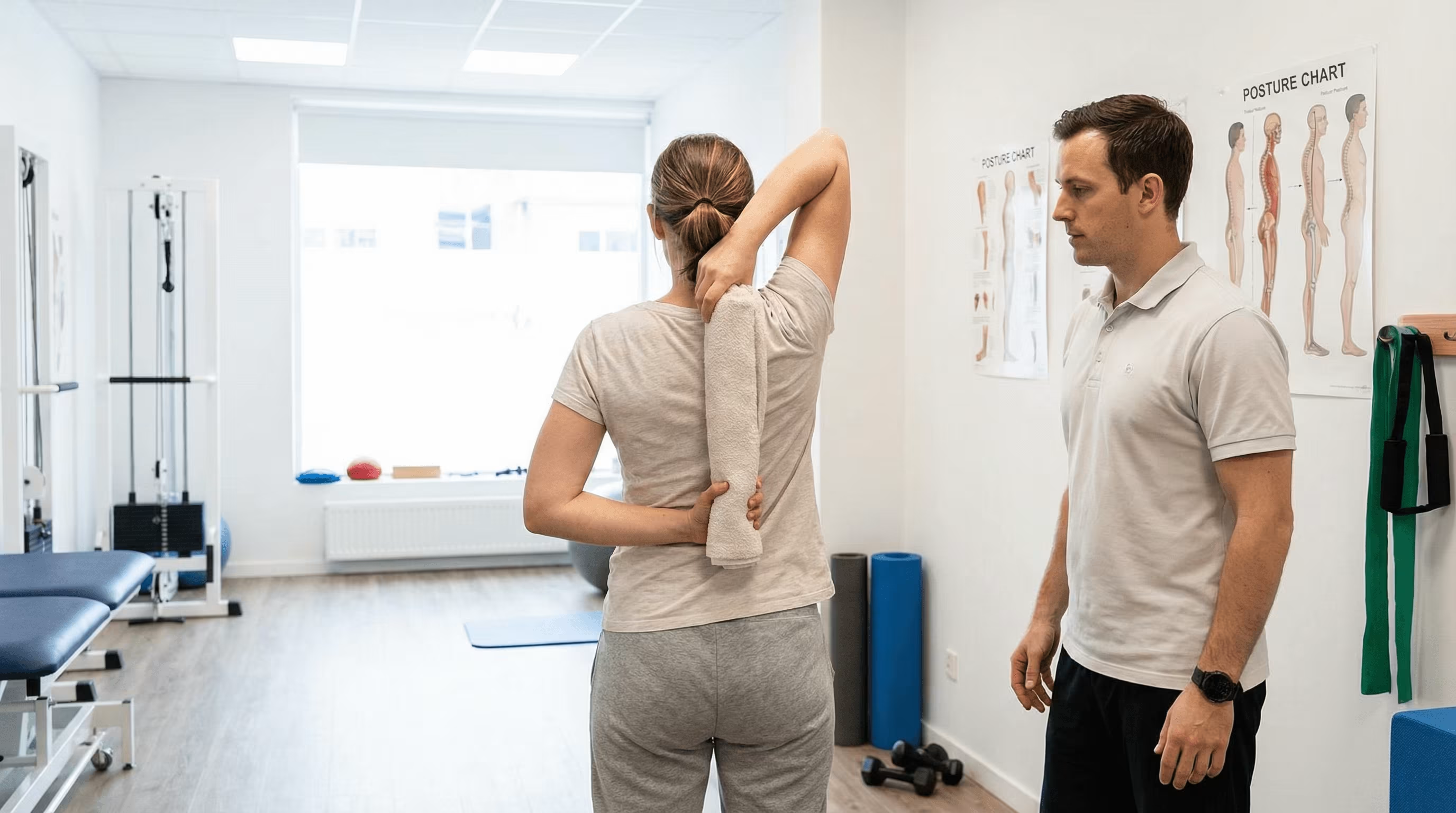
Tricepsstretch över huvudet (med band eller handduk)
Lyft armen över huvudet, böj armbågen och låt handen falla mellan skulderbladen. Använd en handduk eller ett band i andra handen för att hjälpa till försiktigt. Målet är en lätt stretch längs baksidan av överarmen.
Triceps-lean mot vägg: ett kompakt alternativ
Stå vänd mot en vägg, med underarmen mot väggen och armbågen över huvudet. Luta dig försiktigt in tills du känner att triceps och baksidan av axeln öppnar upp. Håll 20–30 sekunder. Den lilla “release” kan göra dina andra övningar vid kubitaltunnelsyndrom mer bekväma genom att lätta på ytterläges-extension i armbågen.
Anpassa om du känner nervsymtom
Om du märker pirr ut i ring- eller lillfinger, minska rörelseomfånget eller avbryt. Stretcha muskel och kapsel — inte nerv. Spara djupare arbete till dagar när symtomen är lugna.
5. Skapulär setting och posturala resets: bygg proximal kontroll
Skulderbladskläm i sittande och liten “chin nod”
God kontroll av skulderbladen minskar belastning längre ner i kedjan. Sitt högt med fötterna i golvet. Kläm skulderbladen mjukt ner och bak, som om du glider dem ner i bakfickorna. Lägg till en liten chin nod för att få huvudet över axlarna. Tio långsamma repetitioner tar under en minut och passar bra ihop med nervglidningar i din rutin av övningar vid kubitaltunnelsyndrom.
Wall angels eller desk angels
Med ryggen mot en vägg, eller sittande upprätt i stolen, glider du underarmarna upp och ner som snöänglar. Håll revbenen “staplade” och ländryggen neutral. Det handlar inte om perfekt kontakt, utan om mjuk, kontrollerad rörelse för att återställa hållningen efter djup koncentration.
Frekvens: 1-minuts mikroset, varje timme
Sätt en diskret timer. Varje timme: lägg en minut på en posture reset. Det är en liten vana som bygger effekt över tid och minskar tiden med armbågen i böjt läge — en vanlig trigger för symtom. Mindre obekväm räckvidd: mer centrerad kontroll.
6. Styrkebalans i underarmen: extensorsarbete och lätt greppträning
Fingerextensioner med gummiband
Trä ett lätt band runt fingrarna och öppna handen mot motståndet. Långsamt ut, ännu långsammare in. Gör 2–3 set om 10. Att bygga upp extensorerna motverkar tung flexoranvändning vid skrivning och grepp — ett smart komplement till andra övningar vid kubitaltunnelsyndrom.
Isometrisk handledsextension (smärtfri)
Med underarmen stödd och handen hängande utanför bordskanten, tryck mjukt upp mot den andra handen och håll 5–8 sekunder. Ingen smärta, inget pirr. Upprepa 8–10 gånger. Isometrik kan lugna symtom samtidigt som du behåller kapacitet.
Set, repetitioner och progression utan flare-ups
Börja lätt och progrediera veckovis: lägg till några repetitioner och sedan mer motstånd, samtidigt som du bevakar irritation dagen efter. Om symtomen ökar — skala ner. Målet är stabil tålighet så att armbågen klarar långa kodpass och redigeringsdagar utan protest.
7. Nattpositionering och mikropauser vid skrivbordet: rörelsehygien som skyddar nerven
Nattips: lätt handdukswrap för att begränsa djup armbågsböjning
Många flare-ups startar på natten när armbågen är djupt böjd. Linda en mjuk handduk runt armbågen och fäst lätt så att du inte kan böja mer än 90 grader. Den enkla “vakten” lugnar ofta morgonpirr och stödjer resten av dina övningar vid kubitaltunnelsyndrom.
60/20-regeln: arbeta, rör dig, reset
Efter 60 minuters fokuserat arbete: rör dig i 20 sekunder. Ställ dig upp, öppna armbågarna, kläm skulderbladen, gör ett set sliders. Små rörelser, stor lättnad. Det är lättare att förebygga irritation än att lugna en full flare-up.
Tangentbord och mus: håll armbågarna öppna och handlederna neutrala

Placera verktygen nära, centrerat och lågt. Ett kompakt tangentbord minskar räckvidden så att armbågarna kan vara öppna. Centralt pekdon minimerar sidobelastning i axeln och minskar vrid i underarmen — viktigt för ulnarnerven. Balance Keyboard håller tangenterna nära kroppen så att handlederna förblir neutrala. Kombinera med en RollerMouse Red eller SliderMouse Pro för centrerad markörkontroll — utan att sträcka, vrida eller klämma. Mindre rörelse, mindre belastning, mer komfort hela dagen.
Testa dessa setups från Contour Devices®:
- RollerMouse Red: precis, central kontroll framför tangentbordet.
- SliderMouse Pro: touchpad-liknande glid med en minimalistisk bar.
- Balance Keyboard: kompakt avstånd som håller armbågarna öppna.
De här valen ligger i linje med tanken bakom övningar vid kubitaltunnelsyndrom genom att minska provocerande positioner medan du arbetar. Bekvämt. I alignment. I kontroll. Contour Devices. Work miracles.
.avif)
Slutsats
Långa timmar vid datorn behöver inte sluta med stickningar i fingrarna och en öm armbåge. Bygg ett kort dagligt cirkelpass med övningar vid kubitaltunnelsyndrom: ulnarnervglidningar, försiktiga tensioners, stretch för flexorer och triceps, posture resets och lätt extensorstyrka. Lägg till nattligt skydd, rörelse varje timme och en setup som håller armbågarna öppna och handlederna neutrala. Centralt pekdon och kompakt skrivande, via en RollerMouse och Balance Keyboard, hjälper dig att behålla alignment utan att tänka på det.
Om symtomen kvarstår eller om du märker svaghet, sök medicinsk rådgivning. När du vill finjustera din setup, utforska ett centralt pekdon och ett kompakt tangentbord så att din rutin inte motarbetas av din hårdvara. Säg hej då till att känna dig öm och distraherad. Ställ in din station för lättnad — och återgå till arbete som flyter precis som du vill.
Viktiga takeaways
- Börja dina övningar vid kubitaltunnelsyndrom med mjuka ulnarnervglidningar — 3–5 smärtfria repetitioner, neutral handled, stanna innan symtom.
- Progrediera till ulnarnervtensioners först när sliders är symtomfria, och avbryt vid skarp smärta, kvarstående stickningar eller svaghet; sök vård vid varningssignaler.
- Använd 20–30 sekunders stretch för underarmens flexorer och triceps/bakre kapsel för att minska trycket vid armbågen och backa direkt om stickningar börjar.
- Gör 1-minuts posture resets varje timme (skulderbladskläm, chin nod, wall/desk angels) för att minska långvarig armbågsböjning och lugna irritation.
- Balansera underarmens styrka med fingerextensioner med gummiband och smärtfri isometrisk handledsextension, och progrediera gradvis för att undvika flare-ups dagen efter.
- Kombinera rörelsehygien och ergonomi — 60/20-regeln, lätt handdukswrap på natten för att begränsa djup böjning, samt ett kompakt tangentbord med centralt pekdon (t.ex. RollerMouse/SliderMouse med Balance Keyboard) för att hålla armbågarna öppna och handlederna neutrala tillsammans med dina övningar vid kubitaltunnelsyndrom.
Vanliga frågor
Vilka är de mest effektiva övningarna vid kubitaltunnelsyndrom att börja med?
Börja med ulnarnervglidningar (sliders) och lägg sedan till lätt stretch för underarmens flexorer och triceps, scapulära posture resets och mild extensorstyrka. Progrediera till ulnarnervtensioners först när sliders är symtomfria. Håll rörelserna mjuka, handlederna neutrala och stanna innan stickningar. Den här ordningen lugnar irritation och återställer rörlighet och kontroll.
Hur gör jag en ulnarnervglidning som en del av övningar vid kubitaltunnelsyndrom?
Sträck armen i axelhöjd med handflatan upp. Böj långsamt armbågen så att handen går mot axeln, och sträck sedan ut igen med neutral handled. Rör dig inom ett smärtfritt rörelseomfång — tänk glid, inte töj. Gör 3–5 repetitioner, 1–3 set, upp till 2–3 gånger per dag.
Hur ofta bör jag göra övningar vid kubitaltunnelsyndrom utan att få en flare-up?
Använd en låg, frekvent dos: sliders 1–3 set om 3–5 repetitioner upp till 2–3 gånger dagligen; stretch 20–30 sekunder i 2–3 håll; lätt extensorarbete 2–3 set om 8–10 repetitioner. Lägg till 1-minuts posture resets varje timme. Minska eller pausa om stickningar, domning eller smärta ökar eller dröjer kvar efteråt.
Vilken skrivbordssetup hjälper vid kubitaltunnelsyndrom, och spelar det någon roll?
Ja. Håll armbågarna lätt öppna och handlederna neutrala genom att placera tangentbord och pekdon nära och centrerat. Minska räckvidd och vrid i underarmen med kompakta layouter och centrala pekdon. Följ 60/20-regeln: efter 60 minuters arbete, rör dig i 20 sekunder — öppna armbågarna, resetta hållningen och gör ett kort set nervglidningar.
Hur lång tid tar det innan övningar vid kubitaltunnelsyndrom fungerar?
Milda fall kan känna lindring inom 1–3 veckor med konsekventa, symtomfria glidningar, posture resets och ergonomiska förändringar. Mer irriterade nerver kan ta 6–8 veckor. Om symtomen kvarstår, förvärras, stör sömnen eller om du märker svaghet eller fumlighet, kontakta vård för bedömning.
Behöver jag en ortos/skena vid kubitaltunnelsyndrom, eller räcker övningar?
Övningar plus ergonomi hjälper många. En mjuk nattwrap eller armbågsskena som begränsar djup böjning kan minska morgonstickningar och skydda återhämtningen. Dagtidspolstring kan avlasta om du lutar dig på armbågarna. Om symtomen kvarstår trots detta, prata med vårdpersonal för att anpassa behandlingen eller titta på fler alternativ.
